Are you a bit of a control freak? Do you wish to start an online business “the right way”, but still don’t want responsibility of warehouse managing? Well, there is an option; Work with a 3PL (shortened from Third Party Logistics). A 3PL is a service a lot like the one dropshippers offer customers; A warehouse that handles the daily logistics management, such as inventory, staff, picking/packing and also shipping and freight forwarding.
Dropshipping vs. outsourcing to a 3PL
Unlike dropshipping, you will need to invest in your own inventory, but if you have a clear product in mind that you want ownership over, this is definitely the way to go for you. You will naturally also have to pay to have this inventory at a 3PL warehouse, but the cost of outsourcing your warehouse can surely be worth it depending on the volume of your shipments. This is because 3PL’s have great carrier agreements that you yourself just can’t compete with. Read about Cost Control here.
Let’s view the benefits of outsourcing your warehouse to a 3PL:
Cost reduction This is the big plus. Freight companies will, as mentioned above, give better pricing on carrier agreements to 3PL’s since they have a lot more goods going out, than the small customer. This is great for the customers who can now save on large carrier expenses.
Provide a better shipping experience Customers are demanding. They often expect same or next-day delivery. Third party logistics provider can meet your customers expectations, even in returns. Also, if any damage or loss of goods should happen during delivery, you will not be held responsible.
No worries about international logistics You don’t have to lift a finger when out of country customers place an order in your online shop. Documentation, customs, duties etc. will be handled for you.
Try new products and markets Since you don’t have to maintain your own warehouse, the flexibility and possibilities are endless. This gives you space to test out new concepts in your shop, without having to commit to large investments in the warehouse.
Sell your own chosen products You will know exactly what you’re selling from the product’s strengths to its weaknesses. You have the control to brand the products and packaging to a more suitable style for your business, which in return will signify seriousness and professionalism.
Is outsourcing to a 3PL worth it in 2021? 🤔
That’s a definite yes! Outsourcing of your warehouse is something that is here to stay and will most likely only become more popular as times go by. A 3PL is worth considering if you’re business is fulfilling more than 10-20 orders a day, running out of valuable storage space, or if you’re afraid any spike in sales will be hard to accommodate causing you to damage your reputation. View all our 3PL partners
Alternatively, you can start out with drop shipping to get an insight into the world of e-commerce and logistics. It’s a relatively inexpensive way to test the potential of yourself as a business owner.
When you know the future of your online business with the products you wish to sell, you can redirect your business’ logistics from your dropshipper to a 3PL. Thus increasing your profit margins and gaining insights to your logistics and control of the product quality. Still, you don’t need to take care of packing, shipping or returns, since the 3PL will handle this.
7 reasons why you should start making money with dropshipping today
Barbara Karen
…and 5 reasons why you shouldn’t. Dropshipping has been the talk of the town in the last year – perhaps because it can be an easy way to make money from home, and since we’ve been quarantining, why not hit two birds with one stone and make a buck in the process? But is it still worth it in 2021? Let’s find out if it’s the gold mine, that we should all start digging, or if there are other options to head for.
What is Dropshipping, and why has it become so popular?
Dropshipping is a retail fulfillment method with an integrated plan to a third party who has the product you wish to sell stocked and handles everything from warehouse management to shipping to returns. Simply put, dropshipping eliminates any product handling on your part. You might never even see or feel the product you’re selling.
The first thing you need to do is open a shop – a lot of new e-commercers choose platforms such as Shopify when starting out, since it’s an easy setup, when you’re all green in the world of html. Shopify also offers supplier databases to easily integrate your shop to. Now you just need to invest in great search engine optimization and other practices to market your shop to the right consumers.
So why should you start dropshipping?
This is the process when you have an online shop with a dropshipping model:
A customer places an order for your product in the checkout of your shop
Your shops integration automatically sends the order to your supplier
Your supplier will then prepare the order and ship it directly to the customer
Sounds like an easy process, right? Well, it can be! Many starting out with selling products “by proxy” have made quite a passive income on it.
Let’s list the benefits of dropshipping:
Less capital required
Easy to get started
Low overhead
Flexible location
Wide selection of products to sell
Easier to test
Easier to scale
These are the cons of utilizing dropshipping:
Low margins
Inventory issues
Shipping complexities
Supplier errors
Limited customization and branding
Is dropshipping still worth it in 2021? 🙈
The concept is still building its way through to the entrepreneurial souls out there; Hard work is naturally required when building an online store with this business model. The model isn’t perfect nor an easy way to a passive income, but it definitely has the potential and advantages, if you know how to quickly and easily navigate through the lurking rough seas.
Online returns – create value for both you and your customers
Jonas Raaschou
Content Manager
Returns of goods are always cumbersome. For some customers, it is also a barrier to online shopping. Fortunately many of us have become accustomed to it and today there are now more flexible solutions.
It is not only cumbersome, it is also a major factor in the impact on the environment. Online shopping has its advantages, but when it comes to shipments, we can not get around the fact that shipping is not environmentally friendly. Not only do we want to have our item shipped, but the return rate for the very large stores is over 50% (source). This is an expensive cost for you as a store and webshop owner.
Our pattern of actions when it comes to shopping is just one of the many factors for the development – it has changed and consumption has increased. We have gotten used to returns and our available amount has increased, which is why more people are also very likely to buy more than they need “just” to have it or to try it.
Fortunately there are many solutions to avoid the high return rate and also save unnecessary paper waste. We have previously written about paperless solutions for you and your customers. DAO, Postnord and Bring offer labelless solutions so that your customers are not required to have a printer when they have to return some items. You do not have to enclose a return label in each order, and your customers can simply write a code on the package, which the carrier transcribes into a label with all the necessary info.
Return labels in each order can increase your return rate more than necessary as it becomes so easy to get rid of an item if one is the slightest in doubt. As mentioned earlier, the tendency may be that the customer does not necessarily think the product is ugly, bad, or otherwise does not live up to expectations. But if the customer is the least in doubt, a return label that almost screams “we get many items returned, use me, to send your dubious items back ”, will be the easy way to get rid of it for the customer.
Easy, online return solution
Besides all the talk about labels, return slips can also be cumbersome. Should the customer print these themselves, and what info have we transferred to this note in relation to how easy it is for the customer to identify the product?
With an online return portal, your customers can easily answer all questions and reasons for returning, so you have all the information in advance.
You get rid of a lot of paper that may or may not ever be used, and your customers get the documentation for the return immediately.
If you connect a labelless solution, the customer can receive a code so that they can send their item(s) back without having to print a return slip and label.
An easy and convenient solution for both you and your customers – and it’s a green way of life, without all that paperwork.
Read more about the Webshipper return portal here or go to setup and examples later in this blog post.
Webshipper return portal
We offer a customized solution that is set up according to your needs, so that you and your customers get the most simple solution.
A customer simply logs in to the return portal by writing their e-mail and order number. That way, the customer can see the items he/she bought and is free to pick the item and to choose the reason for returning. After this, the customer will have to choose whether they want an exchange, their money back or a credit (gift card / voucher).
You can set the reasons for the return, which your customers must be able to choose from, as well as what options there should be for a refund.
Login with email and order number
Choose items to return
Choose reason for returning (and add comment)
Choose form of payment/refund
Return
Customer gets confirmation email and return label or labelless code
You can read more about this way of setting up a return portal righthere.
Are you about to choose a platform within e-commerce? Get to know more about the platform Shopify and what to be aware of if you wish to integrate with the platform. There could be a perfect match between your webshop and Shopify?
As mentioned in an earlier article/post it’s important to show the right shipping rates at checkout so you don’t lose money on your orders or shipments.
The perfect case is when you show dynamic shipping rates. Dynamic shipping rates is a combination of a setup based on your price sheets from the carrier as well as criteria for when shipping rates need to show despite products, services, zip codes etc.
At Webshipper we suggest a combination of our two features; Cost Based Shipping Rates and Advanced Shipping Rules.
Example 1: In addition to different types and sizes of bicycles, a bicycle dealer also sells a lot of accessories. The price of delivering a bike will and must for your customers, of course, be greater than if you only order a helmet.
Here you will set up Cost Based Shipping Rates on the basis of price sheets, so you make sure that the customer sees the right price at checkout. Furthermore, criteria need to be set up on the basis that the freight rate is displayed at a specific SKU number and with a fixed profit of 5%, for example.
If the customer now wanted a bicycle helmet on the webshop, it would make sense to set up criteria for the SKU on smaller items that allow delivery to the parcel shop, and perhaps even a percentage profit on the freight.
It would be a long shot if we offered delivery to the parcel shop during our checkout, because – let’s admit it – not all parcel shops have the opportunity to have a bicycle stored.
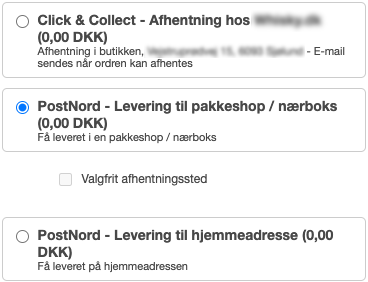
In addition to the above checkout optimization, you can also increase your flexibility in checkout by displaying dynamic parcel shops. If the customer wants to pick their parcel up at a parcel shop, if possible for the products in question, it’s only natural for the customer to choose the parcel shop they wish.
In your e-commerce platform, you can not dynamically display a map or a list of parcel shops. We solve this for most shop systems, with which you give your customers the flexibility and the opportunity to choose which parcel shop they want to use – it is not necessarily the nearest parcel shop that is the easiest to get to. Maybe you already drive past a parcel shop on the way home from work or live in inner Copenhagen, where there may be 200 meters further to a shop in which you already have another parcel to pick up.
If you do not support this option, a choice of parcel shop will result in the choice of the nearest parcel shop, and the customer will first see this premade choice on their order confirmation or in their tracking email from the carrier.
Now, the conclusion from this is that you should optimize your checkout so that it’s more dynamic in order for the company’s optimal return, and for the customer’s checkout experience make it more flexible for them.
If you’re already using one or more of these procedures, that’s great – your customers must be very satisfied, and you might hopefully see by your finances that shipping is not just money you are throwing out the window.
If you do not already do so, Webshipper will definitely recommend that you look at what you can optimize from here and now, and we are of course ready to guide you and take a non-committal talk on how we can inject a great amount of steroids into your checkout.
If you have any questions about checkout or just want to know more, we are at your service. Read more about checkout solutions here or contact us.
Yes and no. In Denmark freight is expensive compared to other European countries. But you have the possibility to negotiate your shipping prices; You’ll just have to be in control of the basis of the costs and your argumentation. Are you losing money on your shipments, or maybe you don’t have complete control of your shipping rates?
Step one!
Manage your shipping price sheets and furthermore your shipping rates displayed in checkout.
Your rates will often vary depending on the type of delivery, same-day delivery, drop point, or environmentally friendly transport. It can also depend on where your parcel is sent from and delivered to and the weight volume in the country.
If possible, set up dynamic shipping rates for your customers, so that shipping rates are optimized for their specific order information and delivery address. This way you make sure you have the right freight prices for you and your customers.
Webshipper offers Cost Based Shipping Rates and Advanced Shipping Rules.
With Cost Based Shipping Rates you can set up automated shipping rates based on your price sheets from each carrier – A dynamic solution based on your customer’s orders and delivery address as mentioned before.
Advanced Shipping Rules is your way to set up criteria for the shipping rates displayed at checkout. For example; Shipping rates displayed at checkout based on the postal code and product weighing over 2kg – it could be different from products weighing less than 2kg.
An ideal set up could be a specific shipping rate before 4:00pm for same day delivery, so that customers shopping after 4:00pm do not expect delivery next day and therefore can not choose that shipping method.
It’s all about the overview
Besides the Cost Control functions, we also offer Cost Management, where you have the possibility to upload and edit price sheets. A solution that keeps you updated with your newest agreements and prices, and also gives you the opportunities to get an overview of your shipments by carriers and services.
You’ll get the total overview to make it easy and simple when negotiating better prices with i.e. GLS, if you are able to show GLS that 80% of your shipments are sent to a GLS drop point. This way you know exactly which service you want at cheaper price, and where the price should lie to be beneficial for you.
Conversely, you can also look at it as a way to assess which shipping rates you earn or lose on the most, and whether you want to raise the profit on those rates at checkout.
To get the best overview, Webshipper offers you the tools to optimize your shipping costs and not least the structure to be competitive and negotiable with your partners.
If you want to focus on optimizing your e-commerce checkout, you can read more here about dynamic checkout – both dynamic prices and not least the possibility to show drop shipping to your customers.
Is your eCommerce business ready to expand to new international markets? Exporting goods can be tricky when it comes to customs documentation. Unlike domestic, commercial shipping, International shipping requires you as a merchant to enclose the correct customs documentation to get your parcel cleared at customs and allow the carrier to calculate the valid tariff for the receiver.
To ensure that your product arrives as efficiently and quickly as possible, you should ensure that you are on top of the Harmonized System (HS), an international system of tariff codes.
Ship parcels internationally with the HS Code system
The Harmonised System (HS) can be pretty tricky to comprehend when you first grasp the system. Fortunately, with a small amount of research and practice, you can quickly master the system and start shipping your parcels to customers around the world.
I hope this guide will help you understand everything you need to know about the HS code system.
Table of Contents
What are HS Codes?
All goods imported or exported from outside the EU should be designated with a tariff number. A tariff number consists of 8 digits when exporting and 10 when importing. For this blog, I will only talk about export.The first six digits come from the international HS system (Harmonized System), Which is why the first six digits are called HS codes.
The HS-system is an international commodity nomenclature that is in use in about 200 countries around the world. The commodity Nomenclature is an extensive catalog including all internationally traded goods.
The next two digits are called CN (Combined nomenclature), which is the commodity nomenclature of the EU. The 8-digits code is used when exporting.Customs authorities worldwide check the codes on your custom documentation. They do this to determine taxation and tariff rules that might apply to the product.
HS codes are also used by the carrier to calculate customs duties for the recipient.The system is exceptionally detailed and hence very complicated to understand at first hand, but don’t worry – By the end of this blog post, you should have a much better understanding of the system and who it is essential to understand when shipping parcels internationally.
What is the structure of an HS code?
The HS-code consists of at least six-digits always written in the format “XXXX.XX”.These six digits consist of three sets of hierarchical two-digits codes that help the shippers find the correct HS code for their products.
Section Numbers
The Harmonized System consists of 21 sections. The sections cover a comprehensive range of categories, such as Section I (Live Animals), Section V (Mineral products), or Section X1 (Textiles)
Screendump tariffnumber.com
TIP
The section numbers help to categorize the products, but they are not included in the HS code and thus not included in the code written in your customs declaration.
Example
Let’s pretend that you want to ship a T-shirt to a customer in the UK. To find the correct HS code, you would start by looking at the right section. For the T-shirt, it’s Section XI (Textiles). When you have identified the correct section, it is time to narrow down the product until you find the right six digits that best describe your product.
Chapter number (XXXX.XX)
Ok, so you have now identified the correct Section number. Now it time to narrow down your T-shirt with the Chapter numbers. The first two digits of the Hs code relate to the Chapter Number. The HS system consists of 98 Chapter numbers across the 21 Sections.In your case we are looking for a T-shirt, the Chapter code is 61, which stands for: “Articles of apparel and clothing accessories, knitted or crocheted”
Heading (XXXX.XX)
After identifying The Chapter number, it is time to find the Heading numbers! There are more than a thousand heading numbers to choose from, so let’s examine the correct one for your T-shirt.The heading number consists of digits number three and four in the HC code. If we dive into Chapter 61 and scroll down to 6109, we will find the Heading including “T-shirts, singlets and other vests, knitted or crocheted” Now we know the Heading number. Let’s move on to The Sub-Heading.
Sub-Heading (XXXX.XX)
The last two digits define your t-shirt even further. The final two digits refer to the Sub Heading, which should cover your T-shirt just right. There are more than 5000 subheadings in the HS code system, but that is not a problem because we managed to narrow it down via the chapter and Heading numbers.Under Chapter 61, Heading 09, we’ll find Subheading “10”: “Off cotton”. Telling you and us that your T-shirt a cotton t-shirt. If you combine all of these digits, you have the complete HS code, which is:
6109.10.00
As you may have noticed, the code consists of 8 digits because this particular HS-code has added two extra digits (00) and, therefore, is eligible for an export declaration. This brings us back to the beginning of the article. Where I described how the extra two digits are necessary for export. When shipping to some countries, you need to include these two additional digits to define the product. For example, when shipping to the United States, you will need to have additional digits from the US Harmonized Tariff Schedule system.However, your t-shirt is ready to get shipped to the US. That’s because the US system uses the HS-code 6109.10.00 for cotton T-shirts. Similarly, if you look at the HS-system, you will discover that the last two digits are automatically added when you look up the six-digit code for t-shirts.
The American system has additional numbers that define the product even more, but it is unnecessary for this particular T-shirt. The two last digits are used to calculate customs duties, taxes, or for statistical purposes.I
t is essential for you as the exporter to research the country of destination’s code system.I pro tip is to ask your product manufacturer to provide a spreadsheet of HS codes for their products. You can then import them into your ERP or e-commerce system, which will eliminate the need to manually look up codes and save you tons of time and frustration. They may even have the correct HS-codes for all international markets 👍.
Which country’s tariff codes should I use?
Remember to use the extra digits and the six-digits HS-code and use the system used in the country you are shipping.It may sound not very clear, but most countries do not differ from the HS-code anyway. The Latin American countries use the Mercosur Common Nomenclature (NMC), which appears complicated. Still, for the t-shirt, the Tarifcode is the same as in Europe and the United States.
How to find HS-codes
It is pretty straightforward. Most countries have a local database, and you can use international code finders as well.I have assembled a list of relevant links where you can look up the HS-code.
Remember always to include HS codes in commercial invoices or your customs declarations. We have built a handy Customs Declaration Generator tool that enables you to create Customs declaration directly from your computer. Read more about how to use HS codes in our Ultimate guide to CN22 and CN23 Customs Declarations here.
Get Tips & Tricks directly in your inbox
We continuously update our website with Tips & Tricks in the form of blog posts, video and podcast.
Sign up and get notification when we have Tips & Tricks for you.
The story of Dialægt/Citatplakat is indeed interesting yet heartwarming; From two similar webshops and consequently devoted rivals to become strong partners in prints. But first, we need to go back in time.
Founded in the early months of 2015, Citatplakat.dk had a vision of selling simple but humorous posters with the premise of funny Danish quotes and especially jolly catchphrases i.e. “You are freaking Amoosing” accompanied with a graphic image of a moose.
In the fall the same year two astrophysicists across the country also had a great idea of selling posters and would soon found the online shop “Dialægt”. Quickly they became popular by selling quirky posters based on specific job titles, family roles or interests.
Fast forward 5 years. Citatplakat participated in the Danish version of the hit TV-show Dragons’ Den to acquire funding, exactly like Dialægt also did successfully a year earlier.
The two companies came together through the Dragons, Jan Lehrman and Jesper Buch, and both companies managed to each obtain investments of DKK 1.2 million for 20% of the companies. Soon a merge between the two rivals would become a reality – a rewarding one.
Fast and reliable order management is a key element in our poster scaleup and we have used Webshipper from the beginning. Webshipper has helped us having a bird’s eye view of our rapidly increasing order volume and the confidence to make fast production promises to our customers.
According to the creative entrepreneurs of Dialægt/Citatplakat Webshipper has made it significantly easier to handle their orders, since the business now utilizes workflows in their integration. Especially the huge dream of an easy system was in focus, and automation would turn out to become a huge key player in making their worries about difficult processes and strenuous tasks history.
If a customer should eventually change their mind about the received item, the shops can now offer a return portal with Webshipper – naturally. In the return portal the customer can choose which item to return or if they need to change their order to another item. Afterwards a shipping label will be sent to their email which they will need to print, slap on the parcel and pass on to a nearby parcel shop.
Now the innovative team of the merged Dialægt/Citatplakat can focus on other aspects of their business with their new freed up time. Should anything become in need of attendance they can rest assured that they have a valuable lifeline at the support hotline of Webshipper.
1. Get smarter with reports
Thanks to the easy dashboard it is now easy to get smarter with the automatically generated reports. The companies make great use of the reports based on their users as an entire audience or specific users and their shopping preferences.
2. Branded email notifications
Dialægt/Citatplakat recognizes the importance of brand recognition which is why they have easily customized their email notifications to match the respective brands of theirs.
3. Complex workflows set up quickly
These guys know automation is key to great efficiency and productivity. By setting up workflows with their order flow they are able to send out handy notifications, virtual gift cards and much more.
A guide to warehouse management & logistics optimization for e-commerce
How can you easily optimize your warehouse and logistics when running a small or medium-sized webshop without the big costs?
Read more about how to get an overview of your warehouse and how you can optimize your order flow, with advice from leading WMS experts and logistics managers.
Louisiana located in Humlebæk, Denmark is a world-class international art museum. Their exhibitions are famous far beyond the borders of the country and they attract visitors from all over the world. But it’s not just the exhibitions, the international literature festival or the digital Louisiana Channel that are of great quality and well-known internationally. The museum’s shop has been chosen as the world’s best museum shop of the year. This is something that the museum’s Head of Digital, Peder Wuth, is fully aware of must characterize Louisiana’s webshop.
The initial idea of setting up a webshop dates back to the year 2000, when it was first mentioned that Louisiana would become digital with an online store. When Covid-19 in March 2020 led to the closure of the museum, quick decisions were made to establish a webshop in a short time. The mission was to have an online store set up as soon as possible. The true potential was widely agreed upon.
Corona was the reason we had to get started quickly, so we sold items from the warehouse close to the store, which you would not normally do. But that was our chosen solution as there were no guests in the shop nor in the museum. It was our first attempt to realize an inventory under Corona. Over time, we have moved our inventory to another location separating our inventory from our physical store.
After a quick startup of the digital shop with manual processes and picking items in the physical store, Louisiana switched to an automated order flow with Webshipper. The museum’s international impact meant that shipments abroad quickly became a reality, which is why more carriers, customs documentation and different freight rates based on locations and weight became necessary to be able to handle international shipping. Same year a collaboration for business development arose where Print-On-Demand also had to be implemented and the setup had to be optimized again.
We were presented with a lot of processes in our solution - and also processes we did not know we needed. We have been given a package solution and received advice, so we do not necessarily research the market for something that Webshipper knows best.
Peder WuthHead of digital, Louisiana
1. Shipping automation
Automatic printing of picking lists and labels for incoming orders. With a single scan of a delivery note, labels with the correct information are created and printed.
2. Paperless customs
Automatic creation of paperless customs documentation for all orders outside the EU, which avoids errors and saves time and money.
3. Dynamic shipping rates
Displays dynamic freight rates at checkout, with specific profit, based on cost prices on freight agreement, which ensures the size of the packages or delivery address matches the delivery price.
4. Workflows
Workflows easily and automatically send specific Louisiana order information to a partner.
Investing in digital presence
Louisiana has invested in the museum’s digital presence for a long time. Head of Digital, Peder Wuth, tells about the digital channel of the museum, Louisiana Channel, which has close to 150,000 followers on YouTube, and lots of digital dissemination through the museum’s website and on social media.
Now the museum also has the webshop, which had a truly succesful kickoff during the first shutdown in March 2020. As the shutdown was quite unexpected, planning and processes had to be greatly accelerated. According to Peder Wuth, the webshop, which at that time was almost exclusively a mere thought, was realized in less than 3 weeks.
The news about the new webshop was fastly spread to almost half a million followers across the museum’s channels, and pretty quickly the realization of future need of larger warehouses and naturally optimization of order flow, order handling, shipping and shipments was crucial.
Webshipper is best when invisible. It is something you notice in daily day life, but you notice it if it’s missing.
Peder WuthHead of Digital, Louisiana Museum of Mordern Art
Om Louisiana
Louisiana was inaugurated on August 14th 1958 and in 2019 was the year that set a record number of visitors with over 750,000 guests, making Louisiana Denmark’s most visited museum.
Since 2010, Louisiana has hosted the annual International Literature Festival; Louisiana Literature with 12-14,000 participants.
Founder of Louisiana, Knud W. Jensen, wrote as early as 2000 in a member magazine that a webshop was making its way.
The shutdown due to Covid-19 was the kickoff of Louisiana’s webshop. It took less than 3 weeks from the first day of the Danish shutdown until Louisiana had turned their store into a warehouse for their brand new webshop.
Already 5 weeks after the initial shutdown, they had automated their order flow with Webshipper.
Trusted by businesses all over Scandinavia and beyond
We know that every business is unique.
Discover how the Webshipper Shipping Platform has helped shops grow.
Shaping New Tomorrow
How Shaping New Tomorrow automated their order flow with Webshipper.
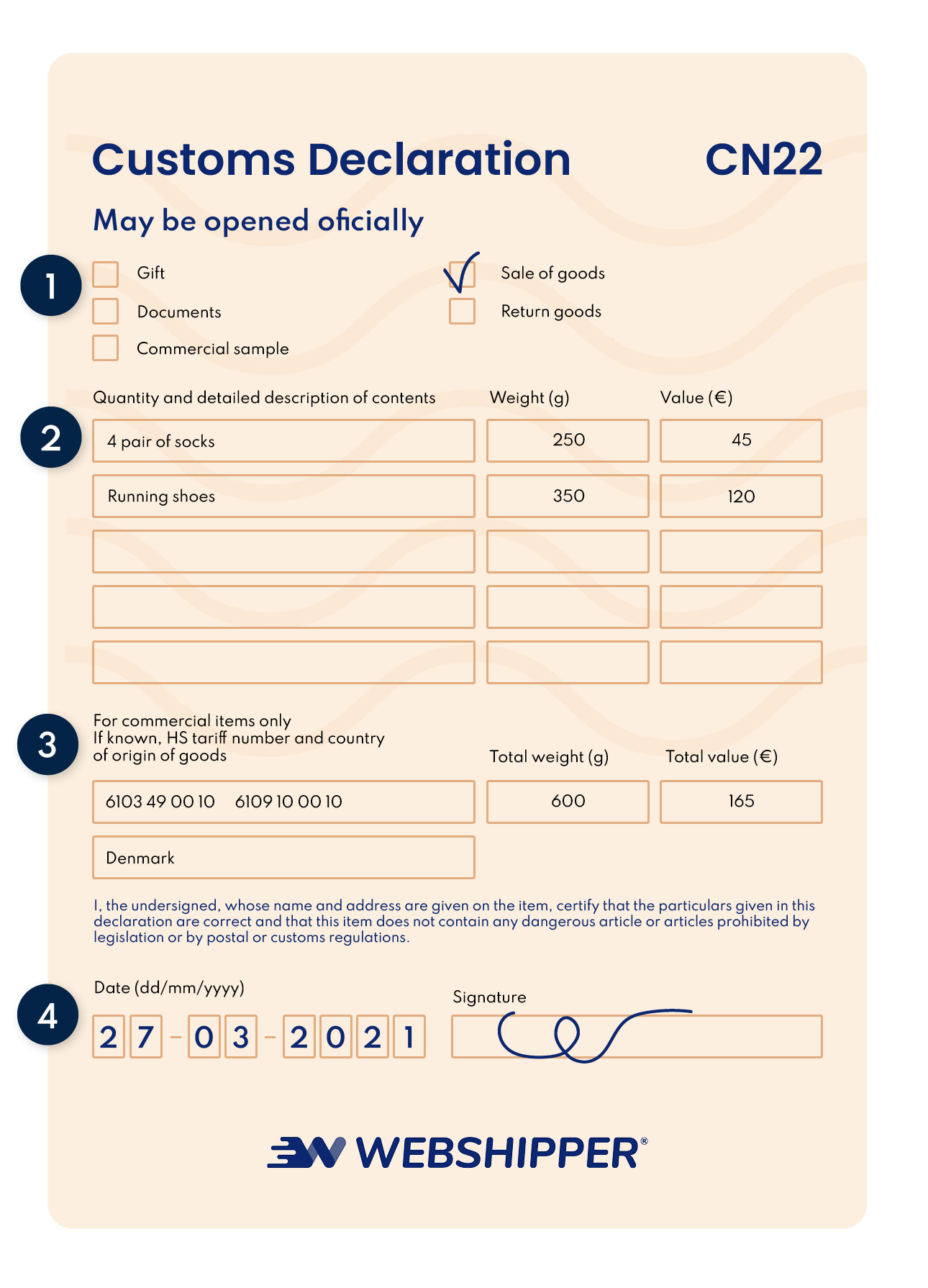
Customs declarations are essential to know about when shipping parcels internationally. The customs declaration form is CN22 or CN23 and is typically given by the carrier, courier, postal service, or international shipper. This guide will help you understand how to fill out these forms for Brexit and international shipping purposes.
Table of Contents
Customs declarations are essential to know about when shipping parcels internationally. The customs declaration form is CN22 or CN23 and is typically given by the carrier, courier, postal service, or international shipper. This guide will help you understand how to fill out these forms for Brexit and international shipping purposes.
Will Brexit kick-start the need for customs documentation in Europe?
When Brexit finally comes into effect on the 1st of January 2021, you will need to fill out customs documents when shipping to the UK, just as it has been necessary for non-EU-countries in the past.
What are the CN22 and CN23 customs declarations?
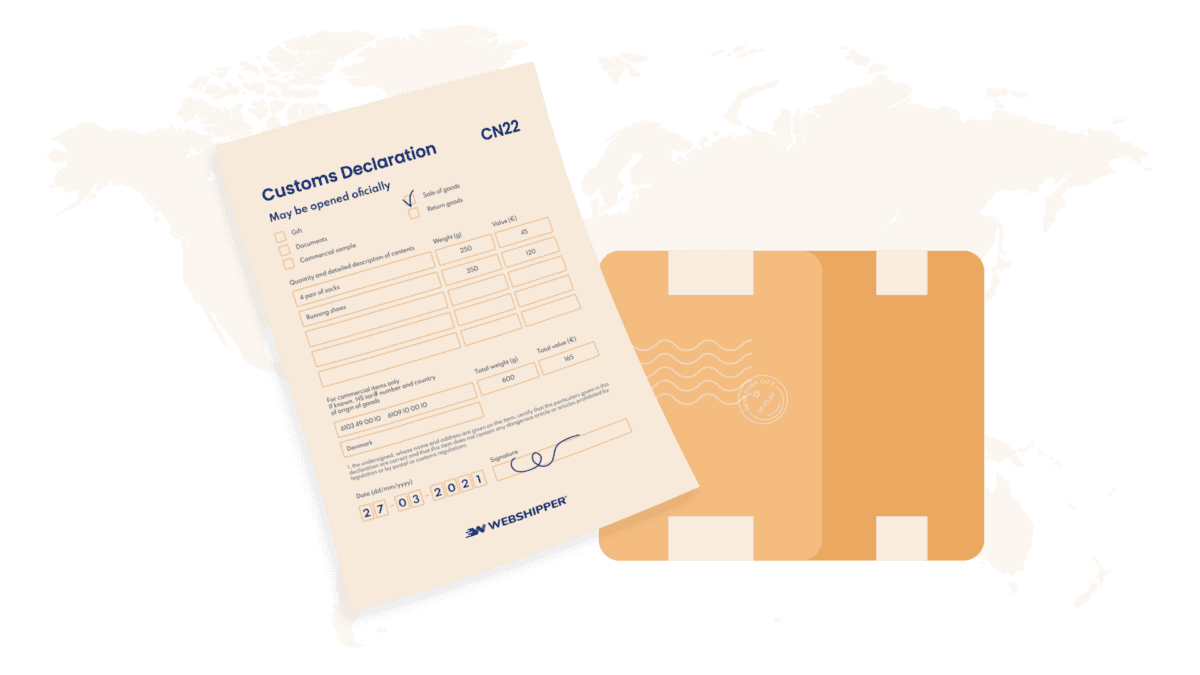
The CN22 and CN23 customs decorations are therefore required for international shipping outside the EU. Still, international shipping, including Norway, Great Britain, and Switzerland, requires the CN22 and CN23 customs forms. As a result, the forms contain information about the goods you are shipping. The consignor is required to fill out the content of the shipment and shipper, consignee, tariff codes (HS-codes), date signature, and in some cases, country of origin. Therefore the documents ensure that the customs authorities can keep track of which goods are entering their countries. The papers are essential when shipping internationally because they enable the authorities to collect the correct tax amount. Modern sorting facilities are often able to scan and read the CN22 or CN23 customs declarations automatically; if they do not comply or accurately describe the parcel’s content, you could be fined, or the package is rejected and returned at your own cost.
When should you use a customs form?
You are required to fill out the customs declaration when shipping internationally to a country outside the EU. When importing from one EU country to another, no customs documentation is necessary. Please check with your local customs authorities for further information about when to use the customs documentation. It would help if you also noticed that exceptions might occur in some regions. For example, there are countries within the EU that are not part of the EU customs zone. Shipments to these regions may be subject to customs control, so you must always include the appropriate customs declaration. Generally speaking, most commercial items are subject to customs control when shipping internationally. But like always, there are exceptions to this rule, so make sure to check the local customs authorities – to avoid any grim surprises.
The difference between the CN22 and CN23 form
You might have stumbled upon the CN22 and CN23 custom declaration forms. But what is the difference? The weight and value of the content dictate which form you are required to attach to the shipments. Packages up to two kilograms (the metric system) with a value up to €425* require a CN22 customs form. The CN23 form is required for shipments weighing from two to 20 kilograms or with a value of €425 or more. When shipping internationally, you must remember to include a commercial invoice in addition to the CN22/CN23 form. This will often ease the handling process for the carrier and customs, so ensure both.
How to correctly fill out the CN22 Customs declaration
The CN22 form is required when you are shipping parcels that weigh less than two kilograms and have a combined value of less than 425 EUR. To avoid delays, being fined, or the shipment being returned, always remember to fill out and correctly include the customs declarations.
Specify the content of the shipment. Most commercial companies will often use “Sale of goods.” Commercial Sample is used if you ship samples of your products. It could, for example, be a color sample for a new kitchen table. You can only choose one per parcel.
Specify the content of the parcel. If the package contains “sale of goods,” “Commercial samples,” or “Return items,” you must include a detailed description of the content. Use English or the language of destination. A clear description eases the process in customs, and the parcel will typically arrive faster due to smooth handling in customs. Remember to specify content, quantity, weight, and value.
Type of products
Quantity
Weights
Value, in euros (including VAT)
Add the international tariff-code (commodity code) and the product country of origin (the country in which the item was produced or assembled). Use the Harmonised System (HS code) for the goods.
Type date and signature. The CN22 form is not valid until it has been signed.
What is HS-code? And how do I find it?
The HS-code is a multi-digit code used internationally to categorize traded goods enabling customs authorities to calculate import duties. International agreements dictate taxation on different goods.
The HS-codes always consists of a ten-digit code. Of which, the first six are internationally harmonized. Make sure to always include the first six digits, and if possible, all ten numbers. The code can be split into three groups of two. The first two digits categorize the products, the second two define the classification, and the final set specifies the product in detail.
Example:
The first two digits may say that your product is clothing, the second two indicate it is a shirt, and the final two tell us it is a cotton shirt. There are some exceptions to this method, some countries require all ten-digits HS-Code, but generally, all you need to apply is the first six digits. If in doubt, please refer to the local authorities.
I have assembled a list of links to the Danish, Swedish, Norwegian, and European Union websites with a list of HS-codes.
Apply date and signature on the form. It is worth mentioning and essential to notice upon signing the document, you declare that the document has been filled out correctly and that the shipment does not contain any banned or dangerous items. If the form is not signed, the shipment may be returned at your own expense! However, some items are banned from shipping internationally. However, your carrier might ship certain goods despite being banned. Ask your carrier for additional information.
The list includes but is not limited to
Alcoholic beverages
Animal skins (non-domesticated)
Articles of exceptional value (e.g. works of art, antiques, precious stones, gold and silver)
Dangerous goods/hazardous materials
Firearms
Furs
Ivory and ivory products
Live animals
Money and negotiable items
Perishable goods
Personal effects (except to the U.S.)
Plants
Pornographic materials
Seeds
Stamps of unusual value
Tobacco and tobacco products
Unaccompanied baggage
Like everything else, there are exceptions, so check the website of your national carrier. They always list goods and materials that are banned from international shipping. Your carrier can also provide a list of items that are prohibited in specific countries.
TIP
Always fill out the form in English and use Block Capitals. That prevents delays and ensures that the correct import duties are utilized.
How to correctly fill out the CN23 Customs declaration
The CN23 customs declaration form is similar to the CN22 version but contains more details and is used for shipments weighing more than two kilograms or with a total value of more than 425 EUR.
Provide address information for both the consignor and the consignee. Make sure to provide all the address details necessary for the carrier to deliver the parcel. Remember also to include the customer’s telephone number and email.
Specify the content of the shipment/parcel. Choose between “Gifts,” “Documents,” “Commercial Sample,” “Returned goods,” or “Other.”
State the product’s commodity code (HS-Code) and country of origin. The country of origin can be tricky but is generally the country where the item was produced or assembled. The HS-system is described under the CN22 customs form above.
“Comments:” If the product, for instance, is subject to quarantine, sanitary, or phytosanitary inspection, then remember to state it in the comments. This typically applies to goods such as food, medicine, or living organisms or animals.
The last thing to do is to specify the date and sign the documents. The document is not legally valid without a date and signature.
Tip
The HS-system is a harmonized system consisting of a multi-digit system that enables custom authorities to categorize products. It contains ten digits. The first six digits are internationally standard, so make sure to always include the first six digits. For further information, please refer to the more comprehensive description above.
Use our Customs declaration generator
To sum up, the CN22 and CN23 customs declarations forms can be quite tedious and challenging to carry out every day. That’s why we have built a free tool, which you can use to create customs declarations in a few seconds. Try the Custom Declaration generator and print CN22 and CN23 forms with a few clicks.
Please be aware that Webshipper ApS ("we", "us", or "our") does not assume any responsibility for the result obtained from the use of this online tool. The "Customs Generator" is for general informational purposes only. All documentation created with the tool is provided in good faith; however, we make no representation or warranty of any kind, express or implied, regarding the accuracy, adequacy, validity, reliability, or completeness of any information provided by our tool.
Need help with automated paperless customs for your business?
If you wish to avoid printing the CN22 or CN23 customs declaration form, then please contact us. We are ready to help your business with paperless customs, a super powerful tool that entirely automates customs documentation. We are more than happy to give even more insights into Paperless Customs and how you can save time and resources with an automated shipping flow.